
Why are most circuit boards green?
Author:LEACH | Date:2026/5/11
Nowadays, circuit boards are widely used in modern information technology and industrial production. They allow circuits to be miniaturized and visualized, playing an important role in the mass production of fixed circuits and the optimization of electrical appliance layouts. According to different design principles, circuit boards can be divided into single-sided boards, multi-layer boards, flexible boards, rigid boards, and various other types. However, have you noticed that most circuit boards on the market are green, while other colors are rare? Why is that?
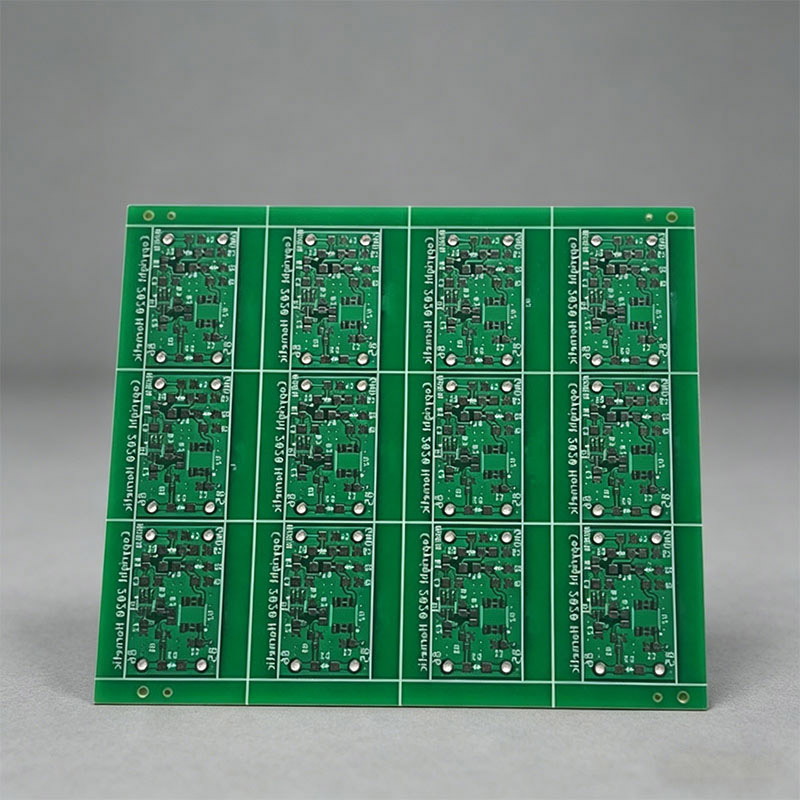
The green part is called solder mask. Its components are resin and pigment; the green part is green pigment. However, with the development of modern technology, many other colors have emerged. It is no different from decorative paint. Before soldering and printing on the circuit board, the solder mask is adhesive and fluid. After being printed on the board, the resin hardens from heating and eventually "cures." The purpose of the solder mask is to prevent the circuit board from moisture, oxidation, and dust. The only areas not covered by solder mask are usually called pads, which are used for solder paste.
In general, a complete circuit board is composed of components such as pads, vias, solder mask layer, silkscreen layer, and copper traces. The colored base layer on the surface of the circuit board is the solder mask layer applied with solder mask ink. The color of the solder mask primarily depends on the color of the ink. In fact, solder mask inks on the market are not limited to green; they also come in red, blue, purple, black, yellow, and other colors. Green, however, is the most common. The main reasons for this are the following advantages of using green solder mask ink.
1. Better visual effect in a yellow light room
When circuit boards are used in the production of electronic products, some processes require a yellow light room. According to optical principles, green circuit boards have better visual effects in a yellow light room, making it easier to monitor the production of electronic products.
2. Easier optical alignment
The manufacturing process of a circuit board includes SMT soldering, which involves soldering and final AOI inspection. These processes require optical alignment calibration, and a green base color provides better recognition for the instruments.
3. Beneficial for workers to observe the circuit boards
It is widely known that green is the most eye-friendly color. Considering that some production and inspection processes of circuit boards are done manually, using green as the base color can reduce eye strain caused by bright light for workers.
4. Environmentally friendly and low cost
When a circuit board is discarded, it needs to undergo high-temperature recycling. Green solder mask ink does not release toxic gases, making recycling more environmentally friendly. Thanks to these advantages, green solder mask ink has the highest adoption rate and the most mature production process. Therefore, producing circuit boards with green solder mask ink also costs less.
Previous:No more

Looking for a professional PCBA manufacturer?
Copyright © 2026 LEACH. All rights reserved
Floor2 &4, Block2, Wandi Industrial Park, Guanlan, Shenzhen,Longhua, Guangdong province, China 518110